January 25, 2026
How to Score Surf from Nor'easters: An East Coast Guide
Nor'easters are the East Coast's best swell producers. Here's how they work and how to time your sessions.
If you surf the East Coast, nor'easters are your bread and butter. These winter storms are responsible for the best waves most of us will see all year.
But timing them is tricky. Show up too early and you're fighting 30mph onshore wind. Too late and you missed the peak. Here's how to read these storms and score.
What Is a Nor'easter?
A nor'easter is a storm that moves up the East Coast with strong winds blowing from the northeast. The name comes from the wind direction, not the storm's movement.
What makes them special for surf:
- They track along the coast — So the wind fetch (the area where wind generates waves) stays aimed at our beaches for extended periods.
- They intensify rapidly — Many nor'easters undergo "bombogenesis" (pressure drops 24+ millibars in 24 hours), creating powerful winds that generate serious swell.
- They produce offshore winds after passing — As the storm moves northeast, winds shift from onshore to offshore for spots south of the storm center.
That last part is the key. The same storm that makes conditions horrible on Day 1 creates perfect conditions on Day 2.
The Three Phases of a Nor'easter Swell
Every nor'easter follows roughly the same pattern:

Phase 1: Building Swell, Onshore Wind (Skip This)
As the storm approaches, winds blow onshore from the east or northeast. Swell builds but conditions are messy — choppy, blown out, usually not worth it unless you're desperate.
What you'll see: Increasing wave heights, short period at first (6-8 seconds), strong onshore wind.
Should you go? Probably not. The juice isn't worth the squeeze.
Phase 2: Peak Swell, Shifting Winds (The Window)
The storm passes your latitude and continues northeast. Winds shift from onshore to offshore — often dramatically, from 20mph east to 15mph northwest within hours.
This is when the magic happens. All that swell is still in the water, but now the wind is grooming it instead of destroying it.
What you'll see: Biggest waves, longer period (10-14 seconds), offshore or light wind.
Should you go? Yes. Drop everything.
Phase 3: Fading Swell, Clean Winds (Bonus Day)
The storm moves further away, swell starts dropping, but conditions stay clean. Often less crowded than Phase 2 because people think they missed it.
What you'll see: Decreasing but still solid waves, continued offshore wind, smaller crowds.
Should you go? Absolutely. Sometimes the best sessions.
Why Wind Direction Matters
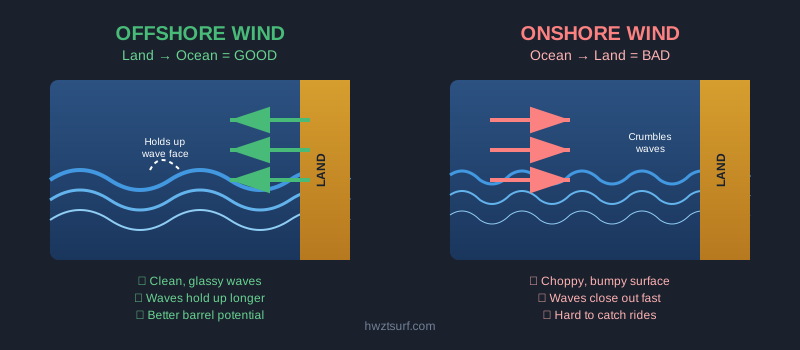
Offshore wind (blowing from land to sea) holds up the wave face, creating clean, glassy conditions. Onshore wind (sea to land) mushes everything out.
The whole game with nor'easters is waiting for that wind shift.
How to Time It
The key question: when do winds go offshore at your spot?
General rule: The further south you are from the storm's track, the sooner you get offshore winds.
If a storm is centered over New York:
- New Jersey might already have offshore winds
- New York is right in the onshore zone
- Rhode Island is getting hammered
As the storm moves northeast:
- New York winds shift offshore
- New England improves
- The swell starts radiating south to the Carolinas and Florida
Practical advice:
- Track the storm's position (any weather app works)
- Note when it passes your latitude
- Expect winds to shift 6-12 hours after the center passes north of you
- Plan to surf the morning after the storm passes
Where to Look by Storm Position
Different spots light up at different points in the storm cycle.
Storm South of You (Approaching)
- Stay home or find a sheltered spot
- Wind will be onshore everywhere
Storm At Your Latitude (Passing)
- Peak swell but worst conditions at your spot
- Look for spots in the wind shadow of the storm
- Southern NJ can be offshore while northern NJ is blown out
Storm North of You (Departed)
- Prime time
- Offshore winds, peak swell at your spot
- Every wave-facing beach should be working
Storm Way North (Long Gone)
- Swell fading but spreading south
- Carolinas and Florida pick up the remnants
- Often clean for days
East Coast Spots That Handle Nor'easters
Some beaches are better positioned than others:
New Jersey:
- Manasquan Inlet — Handles size well, defined peaks
- Long Beach Island — Long stretch, find your spot
- Point Pleasant — Protected from direct north swell
New York:
- Rockaway Beach — Closest to NYC, gets crowded fast
- Long Beach — Better peaks than Rockaway, worth the extra drive
- Montauk — If swell is big, this place handles it
Rhode Island:
- Narragansett — Point break that loves big swell
- Newport — Multiple options depending on swell direction
North Carolina:
- Cape Hatteras — The sandbar machine
- Jennette's Pier — Consistent, cameras for checking
Florida:
- Jacksonville Beach — First FL stop for NE swell
- Cocoa Beach — Picks up anything that makes it south
Check all our East Coast spots for current conditions.
What to Watch in the Forecast
Before any nor'easter, I check these things:
- Storm track — How close to the coast? Closer = bigger swell but more wind issues.
- Storm speed — Slow-moving storms generate more swell. Fast movers are hit-and-miss.
- Swell period — Anything over 10 seconds is worth getting excited about. Over 14 seconds? Clear your schedule.
- Wind shift timing — When do models predict the wind switches from east to northwest?
- Secondary swell — Big storms often produce a second pulse of swell 24-48 hours after the first.
Model Agreement Matters
Here's something most apps don't tell you: forecast models often disagree on nor'easters. A lot.
One model might predict 6ft, another says 4ft. One shows winds going offshore at 8am, another at 2pm.
That's why we pull from three models (WaveWatch III, ECMWF, Open-Meteo) and show you when they agree vs. when they don't. High confidence means go. Low confidence means check the cams before driving two hours.
Real Talk: Nor'easter Challenges
These storms aren't all sunshine and barrels.
Cold: Winter water temps in the 40s (sometimes 30s up north). You need a quality 5/4 wetsuit, boots, gloves, and hood. A cheap suit will ruin your session.
Snow and ice: Getting to the beach can be the hardest part. Give yourself extra time, check road conditions.
Crowds: Every East Coast surfer knows about nor'easters. The day after a storm, popular spots will be packed. Consider less obvious breaks or surf at weird times.
Danger: Big winter swells have serious power. Currents get strong. Ice can form on the beach. Don't surf alone, know your limits.
One More Thing
Nor'easters are why the East Coast can compete with anywhere. Yeah, our average day is worse than California's average day. But our good days? When a nor'easter lines up and the wind goes offshore and you score head-high barrels in January?
That's worth shoveling snow for.
Track the next one at hwztsurf.com/spots.
Check out Howzit
Free surf forecasts for 76 East Coast spots. Multi-model blending, confidence indicators, no BS.
View All Spots →